 The Huntsville rat problem
Why Rat Control in Huntsville Is a Year-Round Concern
Huntsville's position in the Tennessee Valley gives it one of the more persistent rat problems of any mid-sized Alabama city. The combination of factors is specific: a humid subtropical climate with mild winters that keep rat breeding cycles running all twelve months, a mature hardwood canopy across older neighborhoods that gives roof rats continuous overhead access from tree to roofline, and a rapidly growing urban core around Big Spring Park and the medical district that feeds Norway rat populations through restaurant waste, sewer infrastructure, and dense development.
Unlike cities further north where a genuine cold winter interrupts rodent populations, Huntsville's January average lows hover in the mid-30s — cold enough for rats to seek indoor warmth, but not cold enough to kill them. The Tennessee Valley hardwood canopy that makes Twickenham and Blossomwood beautiful is the same canopy that puts roof rats in contact with attic vents, soffits, and eave gaps on a daily basis. Monte Sano's wooded ridgeline sends a new wave of roof rats downslope every fall as temperatures drop and food sources diminish.
Huntsville's aerospace and defense economy has also driven rapid residential growth — Hampton Cove, Providence, Brownsboro Road subdivisions — where construction disturbs established rodent habitat and pushes displaced populations into new structures. Properties that are five years old or newer can face elevated rat pressure precisely because they displaced existing colonies during site preparation.
Key fact: Huntsville supports two distinct rat species — Norway rats (Rattus norvegicus) entering at ground level, and roof rats (Rattus rattus) traveling overhead via the canopy. They require different treatment approaches. Identifying the correct species before treatment is not optional — it determines where you set traps, where you seal, and what bait placement looks like.
Norway Rat vs. Roof Rat in Huntsville
Both species are active in Huntsville, but they inhabit different parts of a property and use different entry routes. Treating for the wrong species wastes time and money.
| Characteristic | Norway Rat | Roof Rat |
|---|---|---|
| Body size | 7–10" body, heavy-set, blunt nose | 6–8" body, slender, pointed nose |
| Tail | Shorter than body | Longer than body |
| Entry route | Ground level — foundation, sewer, utility gaps | Overhead — roofline, soffits, vents, tree contact |
| Nesting zone | Crawl spaces, wall bases, underground burrows | Attics, upper wall cavities, false ceilings |
| Huntsville hotspots | Downtown, Medical District, older crawl-space homes | Twickenham, Blossomwood, Monte Sano, Five Points |
| Peak activity | Year-round; peaks late fall | Year-round; peaks fall through early winter |
Signs of a Rat Infestation in Your Huntsville Property
Droppings
Rat droppings are ½–¾ inch, capsule-shaped, and pointed at one or both ends. Fresh droppings are dark and moist; older ones are gray and hard. Norway rat droppings concentrate near burrows at ground level; roof rat droppings appear in attics and along elevated runways.
Sounds
Scratching, scurrying, or thumping — especially at night between 11PM and 3AM when rats are most active. Roof rats produce ceiling sounds; Norway rats create wall-base and crawl-space noise. Consistent noise from the same location indicates an established runway.
Grease marks
Rats follow the same paths repeatedly and leave dark, oily smears along walls, pipes, and beams. These grease marks — called runways or rub marks — identify travel routes and help target trapping locations accurately.
Entry points
Norway rats can enter through gaps as small as ½ inch. Roof rats can squeeze through ¼-inch openings. Common Huntsville entry points include deteriorating crawl-space vents, gaps around HVAC penetrations, open soffits, and tree limbs within 18 inches of the roofline.
Gnaw damage
Rats must gnaw to keep their incisors from overgrowing. Look for gnawed wood around pipe penetrations, chewed electrical conduit (a fire risk), damaged insulation, and gnaw marks on food packaging in pantry areas.
Nesting material
Shredded insulation, paper, fabric, or plant material gathered into a pile indicates an active nest. Roof rat nests appear in attic corners and wall cavities; Norway rat nests are found in crawl spaces, under appliances, or in outdoor burrows near the foundation.
Our Rat Control Process in Huntsville
- 1
Free property inspection
We walk the full property — interior and exterior — documenting droppings, runways, entry points, nesting sites, and species indicators. You receive a verbal summary on-site before we recommend anything.
- 2
Species identification
Norway rat or roof rat (or both) determines everything that follows: trap placement height, bait station locations, exclusion priority zones, and sanitization needs. We don't skip this step.
- 3
Targeted removal
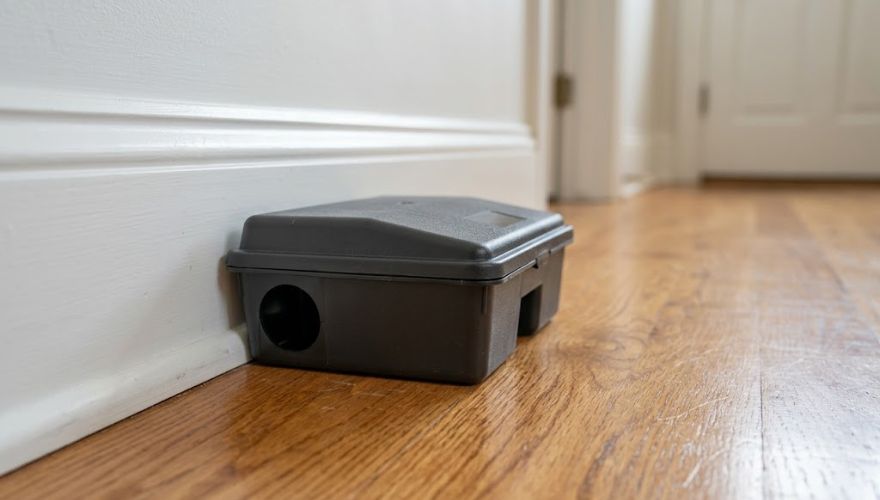
We place snap traps and, where appropriate, enclosed bait stations at identified runway and entry locations. Placement is based on what we found during inspection — not a standard template dropped into every job.
- 4
Entry point exclusion
Removal without exclusion is a temporary fix. We seal the gaps — crawl-space vents, roofline penetrations, foundation gaps, utility entries — using appropriate materials matched to entry type and location.
- 5
Sanitation guidance
We advise on droppings cleanup, contaminated insulation, attractant removal, and landscaping changes (particularly tree trimming for roof rat prevention) that reduce the probability of reinfestation.
- 6
Written quote and follow-up
Every job gets a written quote before work begins. For multi-phase exclusion projects, we outline the full scope so there are no surprises.
Stop the Damage Before It Spreads
Rat damage to insulation, wiring, and structure compounds daily. Call for a free inspection across Huntsville and Madison County.
📞 Call (844) 635-0403Rat Control by Huntsville Neighborhood
Each Huntsville neighborhood has a rat pressure profile shaped by construction era, canopy density, proximity to food infrastructure, and drainage patterns.
Twickenham and Blossomwood: These historic neighborhoods sit under a near-continuous oak and hardwood canopy. Roof rats travel the canopy from adjacent wooded slopes and enter through deteriorating soffit boards, damaged ridge vents, and aging wood framing that's developed gaps over decades. Heritage-sensitive exclusion materials are available for homes in the historic Twickenham district.
Downtown Huntsville and the Medical District: Norway rat pressure dominates downtown. The restaurant corridor near Big Spring Park, hospital loading docks, and the dense residential development along the medical district perimeter all create consistent food and harborage. Commercial properties in downtown Huntsville and the medical district typically require ongoing bait station programs rather than one-time removal.
Monte Sano and Jones Valley: The mountain-adjacent topography of Monte Sano and Jones Valley creates direct wooded corridors into residential properties. Roof rats follow drainage draws and tree lines from Burritt on the Mountain area properties downslope into residential streets. Fall is the highest-pressure season here as rodents move downhill seeking winter warmth.
Hampton Cove and Providence: Newer subdivisions in Hampton Cove and Providence experience elevated pressure from construction disturbance of existing habitat. Norway rats displaced during grading and site prep relocate into new structures — often within the first two to four years of occupancy.
Cummings Research Park: Light industrial and office properties at Cummings Research Park require compliance-aware bait station programs with documentation. Norway rat activity along perimeter drainage and loading areas is the primary concern for this corridor.
Rat Damage Risks in Huntsville Homes
Beyond the obvious hygiene concerns, rats cause structural and safety damage that accumulates quickly:
- Electrical fire risk: Rats gnaw electrical wiring insulation. The National Fire Protection Association estimates a significant percentage of house fires of unknown origin involve rodent gnawing on wiring. In Huntsville's older housing stock — especially pre-1970 construction in Twickenham and Merrimack — this risk compounds with aging wiring infrastructure already at higher failure rates.
- Insulation contamination: Roof rats nesting in attic insulation contaminate the material with urine, droppings, and nesting debris. Contaminated insulation loses thermal efficiency and poses a health risk. Replacement is often necessary after an active roof rat infestation in a Huntsville attic.
- HVAC duct damage: Both species chew through flexible HVAC ductwork. Damaged ducts reduce heating and cooling efficiency and can push contaminated air into living spaces. Our attic proofing service includes duct inspection as part of the assessment.
- Structural gnawing: Norway rats burrow under and through concrete block, wood framing, and foam insulation. Over time, foundation gnawing creates new entry points faster than they can be sealed without a comprehensive exclusion program.
Related Services
Rat control typically involves or leads to additional services depending on the severity and duration of the infestation:
- Exclusion Services
- Rat Proofing
- Attic Proofing
- Crawl Space Sealing
- Attic Cleanup
- Insulation Replacement
- Roof Rat Removal
- Norway Rat Control
- Inspection Services
- Rat Nest Removal
- Same-Day Rat Removal
- Commercial Control
Frequently Asked Questions — Rat Control in Huntsville
How do I know if I have rats or mice in my Huntsville home?
Rats leave larger droppings (½–¾ inch, capsule-shaped), produce louder sounds (thumping, heavy scurrying), and leave visible grease marks along runways. Mouse droppings are rice-sized and found in higher concentrations. If you're unsure, a free inspection confirms the species and shapes the treatment plan.
What types of rats are most common in Huntsville?
Huntsville supports both Norway rats and roof rats year-round. Norway rats are ground-entry rodents common in downtown, the medical district, and older crawl-space homes. Roof rats are aerial-entry rodents that use Huntsville's mature hardwood canopy to access attics — they're the dominant species in Twickenham, Blossomwood, Five Points, and Monte Sano.
Do rats in Huntsville come back after removal?
They can, if the entry points aren't sealed after removal. Rats have established territory and will return through the same routes. Exclusion — physically sealing the gaps — is what prevents recurrence. We include exclusion assessment in every rat control job.
Is rat activity in Huntsville seasonal?
No. Huntsville's humid subtropical climate means rat breeding continues all year. Activity increases in fall when rats seek warmth indoors, but a Norway rat or roof rat infestation can develop in any month. This is one of the key differences between Huntsville and cities with colder winters.
How much does rat control cost in Huntsville?
Most jobs range from $300 to $1,500 depending on infestation size, property type, and whether exclusion work is included. Large attic infestations requiring full exclusion and insulation replacement run higher. We provide a written quote after the free inspection.
Can you do same-day rat removal in Huntsville?
Yes, same-day service is available Monday through Saturday, 7AM–10PM, subject to schedule availability. Call (844) 635-0403 to check open slots for your neighborhood.