 The roofline problem
Why Huntsville Attics Are Particularly Vulnerable
Huntsville's mature hardwood canopy -- particularly across Twickenham, Blossomwood, and the Monte Sano foothills -- provides direct overhead access to rooflines for roof rats, a species that evolved in arboreal environments. Once a roof rat reaches the roofline, access to the attic space depends on the condition of soffit panels, fascia boards, attic ventilation screens, and plumbing stack openings. In Huntsville's older housing stock, these components often have deteriorated over decades of weather cycling, creating multiple entry points that rats locate and use reliably.
House mice also access attics through roofline gaps smaller than those used by rats, making attic proofing relevant for both species. A single mouse-sized opening at a roofline junction is sufficient for a house mouse colony to establish in the insulation above the ceiling.
Attic Proofing Entry Points We Seal
Open soffits
Deteriorated or absent soffit panels expose the rafter ends and provide direct attic access -- a primary roof rat entry across Huntsville's older housing stock.
Fascia board gaps
Gaps between fascia boards and roofing material, particularly at corners and trim junctions, are the first places roof rats investigate when approaching a roofline.
Attic ventilation screens
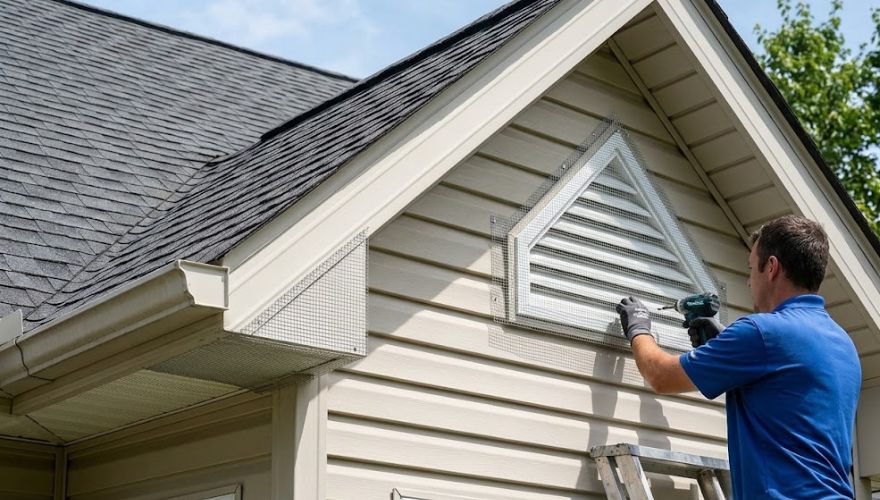
Ridge vents, gable vents, and eave vents with deteriorated screening are major roof rat entry zones requiring hardware cloth overlay or full replacement.
Plumbing stacks
Where plumbing vents exit through the roof, the flashing junction often leaves a gap accessible to both roof rats and mice. Hardware cloth collar installation closes this entry.
Tree limb contact
We document all tree limbs within 6 feet of the roofline and note those requiring trimming -- the foundational prevention step for recurring roof rat entry.
Utility line entry
Where electrical service, cable, and HVAC lines enter the attic through exterior walls or roofline, gaps around penetrations provide mouse-sized access often overlooked.
Proofing on Huntsville Historic Homes
Attic proofing on Twickenham and other historic-district properties requires careful material selection to avoid damaging or altering original architectural fabric. We use materials that seal effectively without requiring visible modification to original soffit panels, fascia boards, or trim -- and discuss any work that would alter exterior appearance before proceeding.
Frequently Asked Questions
How do I know if my attic needs proofing?
Signs include visible soffit gaps from the ground, attic vent screens that are visibly deteriorated, tree limbs touching your roofline, and any history of roof rat activity in your neighborhood. We assess these during the free inspection.
Can attic proofing be done without getting on the roof?
Most entry points can be addressed from an extension ladder at the roofline without direct roof walking. For ridge vent work or plumbing stack collars, limited roof access may be needed. We assess access requirements during the inspection.
Do you replace attic vent screens entirely?
If existing screen is in poor condition, we replace it with new hardware cloth secured to the vent frame. Where the screen is structurally sound with isolated damage, we overlay with hardware cloth patch rather than full replacement.
How long does attic proofing take?
A standard residential attic proofing job takes 2-4 hours depending on roofline length, number of entry points, and access difficulty. We quote time and scope before beginning.
Should I do attic proofing before or after insulation replacement?
Proofing should be done before insulation replacement whenever possible -- sealing entry points first ensures new insulation is not immediately contaminated by continued rodent access.