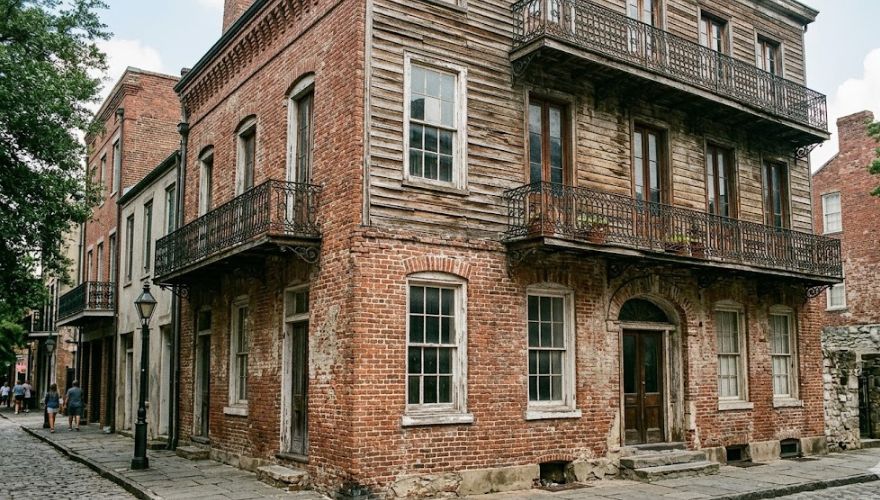
 Twickenham, Blossomwood, Five Points
Why Historic Huntsville Homes Face Elevated Rodent Risk
Huntsville's historic neighborhoods present a rodent control challenge that newer construction does not share: century-old structural systems, generations of mature canopy growth, and architectural features never designed with modern pest control in mind. Pre-1940 construction in Twickenham and Blossomwood typically features pier-and-beam foundations with open crawl spaces, original wood-frame construction that has shrunk and settled over 80-100 years, original soffit and fascia systems that have cycled through Huntsville's temperature and humidity extremes, and mature oak and sycamore canopy that reaches directly to rooflines.
At the same time, historic properties have preservation obligations -- whether formal historic district designation, local ordinance constraints, or the owner's commitment to maintaining original character. Rodent control must eliminate the infestation without drilling through original brick, visibly altering original woodwork, or applying treatments that damage historic materials.
Our Approach to Historic Huntsville Properties
Heritage-Aware Inspection
We identify all active infestation evidence and entry points with attention to which gaps are in original versus modified construction. We document what we find and note which sealing approaches would preserve original materials and which might require discussion before proceeding.
Species Identification -- Critical for Historic Homes
Twickenham and Blossomwood properties typically see roof rat infestations driven by canopy access and potentially Norway rats in the crawl space simultaneously. Correctly identifying which species are present drives the entire treatment approach.
Material-Compatible Sealing
We use materials matched to historic surfaces: copper mesh in brick weep holes, lime mortar-compatible sealants on historic masonry, and hardware cloth attachment methods that do not require drilling original wood. We avoid foam sealant on original wood trim or brick without discussion.
Canopy Access Assessment
We document all tree limb contact points at the roofline and provide written notes on recommended clearances. For properties where trimming would affect historic character, we identify sealing alternatives that reduce entry pressure when canopy access cannot be fully eliminated.
Historic Districts We Serve
We regularly work in Huntsville's historic neighborhoods: the Twickenham Historic District (Huntsville's largest, with over 70 pre-1900 structures), the Old Town Historic District, Blossomwood, Five Points, and the historic residential corridors along Holmes Avenue and Randolph Avenue. We understand the rodent pressure patterns specific to each area and the construction types that characterize each neighborhood.
Frequently Asked Questions
Will you drill through original brick or wood for exclusion?
Not without explicit discussion and your approval. We identify sealing methods that work with the existing structure rather than modifying it. When a structural penetration is the best solution, we present that option with alternatives.
How do you handle roofline sealing on an 1890s Twickenham home?
We use hardware cloth attachment methods compatible with the original fascia material, stainless mesh at open soffit sections, and copper mesh at brick weep holes. We avoid adhesives or fasteners that damage original wood surfaces.
Do you work with historic preservation guidelines?
We are aware of Huntsville's historic district design standards and work within them. If your property is under a formal historic preservation covenant, we provide written documentation of work done that is compatible with preservation records.
Can you treat an occupied historic home without disrupting the household?
Yes. Interior treatment uses placement methods that are out-of-sight and non-disruptive to daily household use. We coordinate access timing with you and work efficiently to minimize equipment presence in lived spaces.
How do you handle the canopy access problem if trees can't be trimmed?
When trimming is not feasible, we focus on sealing the roofline entry points that canopy provides access to. This requires more maintenance over time but provides effective protection when combined with annual perimeter re-checks.