 What you're facing
Why "Just Put Out a Trap" Doesn't Work for Established Infestations
A house mouse (Mus musculus) is the most reproductively aggressive rodent common to Huntsville homes. A single female produces 5–10 litters per year, with 5–6 young per litter, maturing sexually in as few as 35 days. An established infestation — one that's been present for more than a few weeks — is no longer a one-animal problem.
A pair of house mice entering a Huntsville home in October can grow to a colony of 30–50 animals by February without intervention. By spring, with Huntsville's mild temperatures sustaining breeding through winter, that colony can exceed 100 if the food and shelter supply supports it.
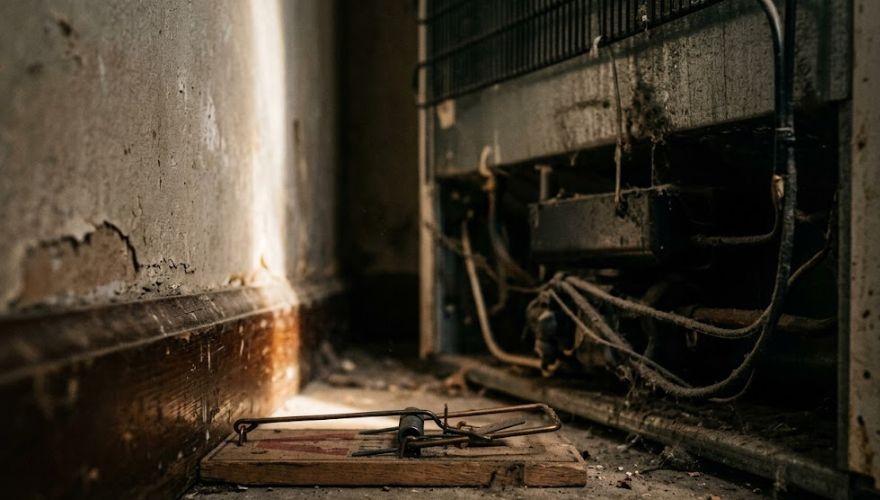
Placing a single trap near the stove or in a pantry corner catches one or two animals and creates the impression of progress. The colony simply adjusts. Mice that avoid the trap site continue breeding; within days, the population returns to its pre-trap level. This pattern — temporary reduction followed by rapid recovery — is why hardware-store approaches to established infestations consistently fail.
❌ Single-trap approach
- 1–2 traps in visible locations
- Catches 1–3 animals
- Entry points remain open
- Colony repopulates within days
- Cycle repeats indefinitely
- No nesting site identification
✓ Full infestation treatment
- Systematic inspection — all runways
- Multi-point trapping coverage
- Nesting sites located and cleared
- All entry points identified
- Exclusion sealing included
- Follow-up visits until clear
Our Mouse Infestation Treatment Process
-
Comprehensive Inspection
We walk every area of your property with active mouse presence — attic, crawl space, basement if applicable, kitchen and utility spaces, garage, and perimeter. We trace droppings concentrations to identify primary runways, locate nesting sites (typically in insulation, behind appliances, and in wall voids near heat sources), and document every entry point ¼" or larger.
-
Colony Size Estimation
Droppings density, nesting material volume, and evidence spread across the property give us a working estimate of colony size. This drives how many trap stations we place and where, and sets realistic expectations for the removal timeline.
-
Systematic Trap Placement
We place snap traps along all confirmed runways — typically at 2–3 foot intervals along walls and behind appliances, in attic spaces at travel paths, and in crawl space access zones. In households with pets or young children, we use placement strategies and covered station types that prevent non-target access while maintaining effectiveness.
-
Follow-Up Clearing Visits
We return on scheduled intervals — typically every 3–7 days — to clear catch, reset, and reassess. Trap pressure is maintained until catch rates drop to zero across multiple consecutive visits, indicating the active population has been eliminated.
-
Exclusion — Sealing All Entry Points
Once removal is complete, we seal the identified entry points. For mouse-sized gaps (¼"+), we use combinations of steel wool with caulk backing, expanding foam with mesh inserts for larger voids, door sweep replacement on exterior doors, and hardware cloth over crawl space vents. This is the step that determines whether your result is permanent or temporary.
How House Mice Get Into Huntsville Homes
House mice can enter through any gap ¼" or larger — approximately the diameter of a standard pencil eraser. In Huntsville's housing stock, this creates dozens of potential entry points per property that homeowners typically don't know exist.
Garage doors
Worn weather stripping creates consistent gaps at door corners — one of the most common mouse entry points in Huntsville's suburban homes.
Foundation weep holes
Open brick weep holes along the foundation slab are intentional for drainage but serve as direct mouse access in older Huntsville construction.
Utility penetrations
Where HVAC lines, plumbing, gas, and electrical service enter the home — gaps around these penetrations are almost universally present without deliberate sealing.
Exterior door sweeps
Damaged or absent door sweeps on utility room, laundry, and garage access doors leave ¼"–½" ground-level gaps that mice travel through routinely.
Dryer and HVAC vents
Duct terminations without functional dampers or with damaged flap seals offer direct interior access, particularly common in older Huntsville homes.
Roof-to-soffit junctions
Where soffit panels meet fascia, gaps allow mice (and roof rats) interior access at the roofline — especially prevalent in older housing stock.
What an Established Infestation Does to Your Home
House mice urinate constantly — they use their urine as a scent trail to navigate familiar routes. An established colony inside a Huntsville home saturates the insulation, wall voids, and subfloor materials with urine over weeks and months. This isn't just an odor issue — mouse urine is a primary vector for hantavirus (rare in Alabama but present), salmonella, and leptospirosis, and it degrades insulation R-value over time.
Mouse gnawing targets soft wiring insulation, cardboard, foam, and wood — creating both fire risk from bare wiring and structural entry points that grow over time. An infestation that started with a single gap will typically create 3–6 additional entry points within a season as the colony's gnawing pressure expands access routes.
The cleanup after an established infestation — droppings removal, contaminated insulation replacement, deodorization — is covered under our attic cleanup and sanitization service for attic infestations and can be quoted as part of full-service treatment for other areas.
Frequently Asked Questions
How is mouse infestation treatment different from putting out a few traps?
Single-trap placement addresses visible symptoms, not the infestation itself. Full-scale treatment involves systematic inspection to find all runways and entry points, comprehensive trapping across all active areas with follow-up clearing visits, and exclusion sealing to prevent re-entry. Without the sealing step, the infestation returns within a season.
How long does mouse infestation treatment take?
The removal phase typically spans 10–21 days with multiple follow-up visits to clear and reset. We consider the active phase complete after catch rates drop to zero across two or more consecutive visits. Exclusion sealing can often be completed during the initial treatment visit or a scheduled follow-up.
How did mice get into my Huntsville home?
House mice enter through gaps as small as ¼". The most common Huntsville entry points are garage door weather stripping gaps, foundation weep holes in brick construction, utility penetrations (HVAC, plumbing, electrical), exterior door sweeps, dryer vents, and gaps where siding meets the foundation slab.
How many mice does a typical infestation involve?
Established Huntsville house mouse infestations commonly involve 10–40 animals. A single female produces 5–10 litters per year, so an infestation that started with a pair in autumn can exceed 30 animals by the following spring without intervention.
Will mice come back after treatment?
Without exclusion, yes — reliably. In Huntsville's year-round breeding climate, surrounding mouse populations will repressure an unsealed property within months. The sealing step is what makes treatment durable rather than temporarily effective.
Is mouse infestation treatment safe for pets and children?
We review treatment methods with you before anything is placed. Snap traps in inaccessible locations are the primary method. If covered bait stations are used, we select placement and product type with your household situation in mind. Nothing is applied without your understanding of the approach.